- Policies and Basic Approach
- Targets
- Structure (Governance)
- Chemical Regulations
- Waste Management and Recycling Initiatives
- Taking Part in Collaborations
- Key Initiative: Introduction of the Dry-Process In-Office Paper Recycler “PaperLab”
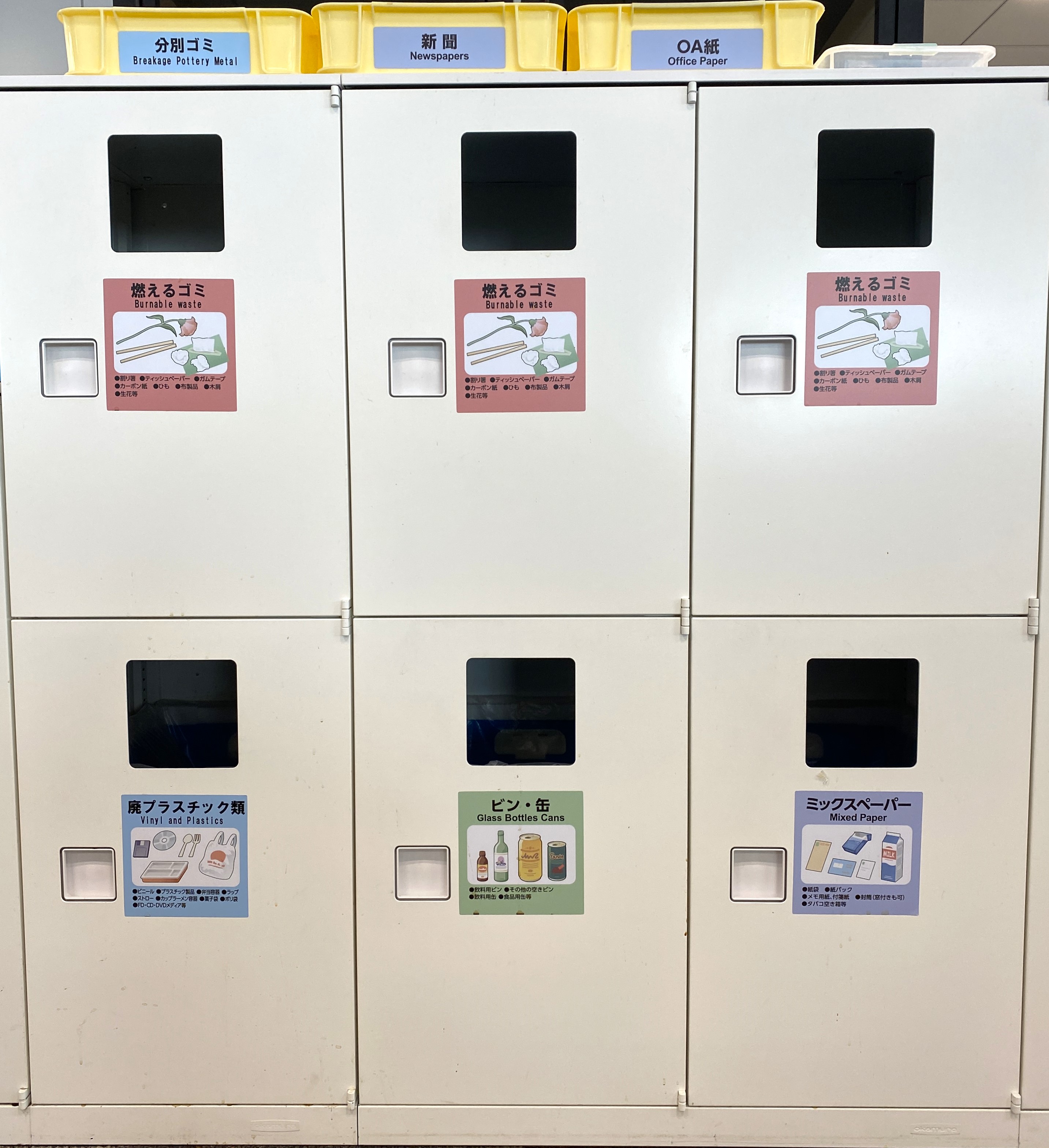
- Key Initiative: Waste separation
- Materials Recycling Business
Policies and Basic Approach
The Inabata Group strives to minimize adverse impacts on human health and the environment by preventing air, water, and soil pollution; reducing emissions of hazardous waste and pollutants and ensuring their proper treatment and disposal; and maintaining appropriate chemical management.
We also promote resource circulation by supporting the sustainable use of resources, minimizing resource use, reducing waste, and advancing recycling.
In our materiality, the Group has identified “contributing to a decarbonized and circular society, sustainable use of natural capital” as a key priority, and is focusing on advancing a circular economy through our business activities.
Targets
In the Sustainability Medium-term Plan 2026, we set strategies, KPIs, and targets.
| Strategy | KPI and target (April 2024 to March 2027) | Boundary |
|---|---|---|
| Ensure safe and secure quality through stronger management of compliance with chemical substances regulations | Ensure safe and secure quality through stronger management of compliance with chemical substances regulations | Consolidated |
Initiatives in FY2024
In FY2024, we carried out the following four initiatives to achieve our target.
| Initiatives | Overview | |
|---|---|---|
| 1 | Regular distribution of global chemical regulations information (monthly) |
The Chemical Regulations Department collects and shares information on global trends in chemical regulations with the entire Company, including overseas Group companies. This initiative aims to raise employees’ literacy regarding chemical regulations, encourage appropriate responses to new regulations affecting our products, and maintain and enhance compliance. |
| 2 | Establishing a global chemical regulations management framework and promoting use of a regulatory search system | We have assigned personnel responsible for chemical regulations management at both domestic and overseas Group companies, establishing a structure that enables each facility to independently comply with national regulations. Additionally, a global chemical regulation search system has been introduced, which allows personnel at each base to verify legal requirements, such as before importing new products. |
| 3 | Verifying and supporting compliance efforts at domestic and overseas Group companies | Through regular meetings with Group companies, we have confirmed the implementation status of the newly established regulatory management framework and provided support where needed. |
| 4 | Hosting internal seminars | We held internal seminars led by external experts on global trends in the circular economy and chemical management of recycled resins. Other seminars on different themes are planned for FY2025. |
Structure (Governance)
Please refer to the System (Governance) section on the Environmental Management page.
Chemical Regulations
Basic Approach
For the Inabata Group, which operates four segments centered around the chemicals business, proper management of chemicals and chemical substances in compliance with laws and regulations is a critical issue. While chemical substances are highly useful, they can also have adverse effects on the global environment, such as water, soil, air, and ecosystems of plants and animals, as well as on human health and safety. Accordingly, numerous relevant laws and regulations apply at various stages, including manufacturing, sales, transportation, and storage, and certain substances require permits and approvals for handling. Failure to respond appropriately could have serious adverse impacts not only on our chemicals business but also on the Group’s overall management. We therefore closely monitor increasingly stringent regulatory trends in Japan and overseas and respond appropriately.
For individual projects within each sales division, we assess potential environmental and social impacts related to chemical substances in advance and implement necessary measures before proceeding with new business initiatives.
Structure
The Company has established a dedicated unit specializing in chemical regulatory management within the corporate administrative division. We are strengthening a chemical regulatory management system across the Group, including domestic and overseas subsidiaries.
Target
Responding to Global Chemicals Regulations
Chemical regulations are being newly enacted or revised around the world in line with the Strategic Approach to International Chemicals Management (SAICM), which aims to minimize adverse impacts on human health and the environment arising from the production and use of chemicals, and its successor, the Global Framework on Chemicals (GFC). To respond to developments under SAICM and GFC, the Group is strengthening its chemical regulatory management framework not only in Japan but also across overseas subsidiaries. These efforts includes introducing and utilizing systems to track regulatory developments in each country and establishing operational rules tailored to local. Through these initiatives, the Group responds appropriately to relevant laws and regulations in countries and regions worldwide.
In Japan, we comply with a wide range of applicable laws and regulations, including the Act on the Regulation of Manufacture and Evaluation of Chemical Substances, the Industrial Safety and Health Act, the Act on the Assessment of Releases of Specified Chemical Substances in the Environment and the Promotion of Management Improvement, the Poisonous and Deleterious Substances Control Act, and the Fire Service Act. We also rigorously manage permits and approvals required under applicable laws.
Examples of Key Chemical Regulations by Region/Country
| Region/Country | Inventory | GHS* |
|---|---|---|
| Japan | Chemical Substances Control Law (CSCL) | Industrial Safety and Health Act (ISHA) |
| USA | Toxic Substances Control Act (TSCA) | Hazard Communication Standard (HCS,OSHA) |
| EU | Registration, Evaluation, Authorisation and Restriction of Chemicals (REACH) | Classification, Labelling and Packaging Regulation (CLP) |
| China | Measures for the Environmental Management Registration of New Chemical Substances | Regulations on the Safety Management of Hazardous Chemicals |
| Korea | Act on the Registration and Evaluation of Chemicals (K-REACH) | Occupational Safety and Health Act |
*GHS: An acronym for the Globally Harmonized System of Classification and Labelling of Chemicals. The system provides a globally unified set of rules by harmonizing the criteria for classifying chemical hazards, as well as the content of labels and safety data sheets. GHS was recommended by the United Nations in July 2003 and has been periodically updated since then. Japan, along with many other countries have adopted GHS for the classification and labelling of chemicals substances.
■List of Business and Product Permits Held by Inabata & Co., Ltd.
Pharmaceutical Manufacturing (Packaging, Labeling, Storage), Pharmaceutical Wholesale Distribution, Cosmetics Manufacturing (Packaging, Labeling, Storage), Pesticide Sales, Fertilizer Sales, Livestock Feed Import, Livestock Feed Sales, Exporter of Narcotics Raw Materials, Importer of Narcotics Raw Materials, Wholesale and Retail of Specified Narcotics Raw Materials, Veterinary Pharmaceutical Wholesale, Sales of Highly Controlled Medical Devices, Type 1 High-Pressure Gas Sales, Type 2 High-Pressure Gas Sales, General Sales of Poisonous and Deleterious Substances, Import of Poisonous and Deleterious Substances, Interior Finishing Construction, Machinery and Equipment Installation Construction, General Construction Work, Secondhand Goods Dealer, Alcohol Sales, Liquor Sales
Voluntary Initiatives for Chemical Safety Management
In order to ensure the safe management of the chemicals we handle, the Company has established internal rules such as the Imported Chemical Product Management Rules and the Internal Chemical Substance Rules based on the Industrial Safety and Health Act., and we operate these rules in compliance with applicable laws and regulations.
We have long centrally managed regulatory information on the chemicals we handle by registering such information in our product master management system. In FY2023, in conjunction with the renewal of our global core system, we further strengthened this management. Ingredient information is now registered as data in the product master, enabling us to manage the latest regulatory information for each product. As a result, we are able to respond in a timely manner to newly regulated substances that are added each year. The same operational approach is applied at domestic and overseas Group companies where this system has been implemented.
We also obtain the latest information on chemical regulations through membership in relevant industry organizations.
In addition, the Company, along with certain domestic and overseas Group companies, has obtained certifications for environmental management (ISO 14001) and quality management (ISO 9001).
Provision and Registration of Chemical Substance Information
To safely manage the products we handle, we believe it is an important responsibility of a trading company that supports the supply chain to ensure that chemical substance information is accurately and seamlessly communicated throughout the supply chain, from upstream to downstream. Under the supervision of chemical substance managers, we obtain the latest safety data sheets (SDS) issued by suppliers and manage them appropriately within the system described above. We also established procedures to ensure that the SDS we issue as importers are regularly reviewed and updated without omissions. By providing SDS to our customers and communicating information on the hazards of chemical substances and safe handling practices, we recognize that we can help prevent occupational diseases caused by chemicals and environmental pollution associated with industrial activities. Although we are a trading company and do not manufacture final products, we believe that appropriate transmission of chemical substance information throughout the supply chain ultimately contributes to raising awareness among consumers.
In addition, we ensure proper registration of applicable chemical substances in compliance with European chemical regulations, including the REACH regulations, as well as the United States TSCA.
Gradual Reduction and Substitution of Chemical Substances of Concern
We recognize that the gradual reduction and substitution of chemical substances that may adversely affect human health or the environment is a critical issue. We are actively addressing this issue. In accordance with the Stockholm Convention on Persistent Organic Pollutants (POPs)* and related national laws and regulations, we are working to reduce the use of certain hazardous chemical substances and promote their substitution. As a trading company, import and export operations constitute a core part of our business. With regard to chemical products containing substances newly added to Annex A (substances to be eliminated) of the POPs, we strictly ensure that all transactions are conducted in compliance with the regulations of relevant countries.
For substances whose continued use may raise concerns in the future based on their chemical structure or trends in risk assessments in various countries, our specialized departments responsible for chemical regulatory management continuously monitor relevant information. This information is shared with employees through internal training programs, while sales divisions work to understand customer requirements and collect information on alternative substances.
One specific example of these efforts is the gradual reduction and substitution of HFCs (hydrofluorocarbons). The Montreal Protocol, an international treaty adopted in 1987, regulate the use of CFCs (chlorofluorocarbons) as substances that deplete the ozone layer. HFCs had been used as substitutes for CFCs; however, because HFCs have greenhouse gas properties, their phase-down was decided under the Kigali Amendment to the Protocol in 2016. Our customers primarily used HFCs as foaming agents, and in response to the Kigali Amendment, we promoted the handling and adoption of HFOs (hydrofluoroolefins) as alternative substances.
*This convention provides for the elimination and restriction of the manufacture and use of persistent organic pollutants (POPs), such as polychlorinated biphenyls (PCBs) and DDT, which are highly persistent in the environment, bioaccumulative, toxic to humans and wildlife, and capable of long-range environmental transport. It also stablishes measures to reduce emissions and ensure the proper disposal of waste containing these substances.
Internal Training
In addition to strengthening organizational management systems, we believe it is essential for each employee handling chemicals to acquire accurate knowledge and consistently follow operational procedures. We conduct company-wide training sessions when relevant laws and regulations are amended, as well as regulatory training tailored to different levels and job functions. Attendance is mandatory for training on important topics. We also regularly offer optional programs, such as basic training on chemical regulations and seminars on global regulatory trends, which are voluntarily attended by many employees each time.
In addition, we have established a chemical regulatory management portal on our internal intranet. The portal enables employees to quickly access essential information, including product management flowcharts, domestic and international regulatory information, and various manuals and application forms. Furthermore, once a month, our dedicated chemical regulatory management department distributes updates on domestic and international chemical regulations to all employees via email.
Through the combination of these various initiatives, we promote company-wide understanding and implementation of the proper management of chemical substances is thoroughly understood and practiced throughout the Company.
Waste Management and Recycling Initiatives
Under our environmental management system, we comply with various laws and regulations, including the Act on Waste Management and Public Cleaning, while working to reduce the amount of waste generated by our business activities and promote recycling.
To prevent improper waste disposal, we regularly conduct environmental audits to verify compliance with relevant regulations and have introduced an electronic manifest system.
In our offices, we promote thorough waste separation, the use of in-office paper recycling equipment, and paperless operations. When outsourcing waste disposal, we select contractors that engage in recycling wherever possible.
Taking Part in Collaborations
We promote initiatives to realize a circular economy by participating in domestic and international collaborations and working together with a wide range of stakeholders.
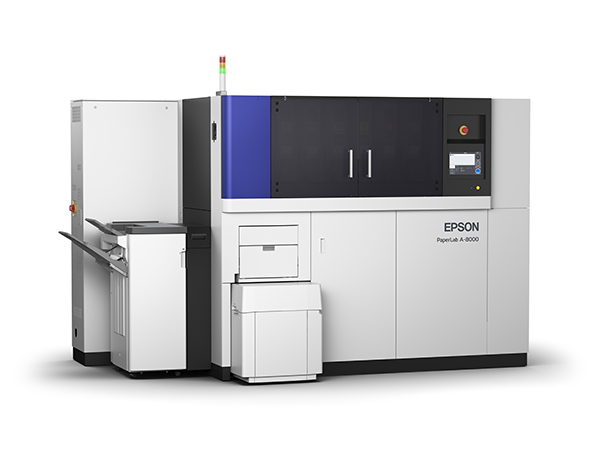
Key Initiative: Introduction of the Dry-Process In-Office Paper Recycler “PaperLab”
We introduced the dry-process (waterless) in-office paper recycler PaperLab in 2019. PaperLab enable us to recycle used copy paper generated in-house and produce new paper within the office. By increasing our in-house paper recycling rate, we are working to reduce waste.
Key Initiative: Waste separation
Without proper separation, office waste is simply discarded; however, by sorting and recycling it appropriately, these materials can be reused as valuable resources. The Company actively promote waste separation in our offices to reduce waste and advance recycling efforts.
Main Categories of Waste Separation
- Confidential documents disposal boxes
- High-quality paper / mixed paper / magazines and pamphlets
- Cans / bottles / plastic bottles
- Paper cups
- Plastics waste
- Combustible waste