
Independent Director Three-Way Talk
Three-way Talk
(The three-way talk was held in mid-May 2025.)
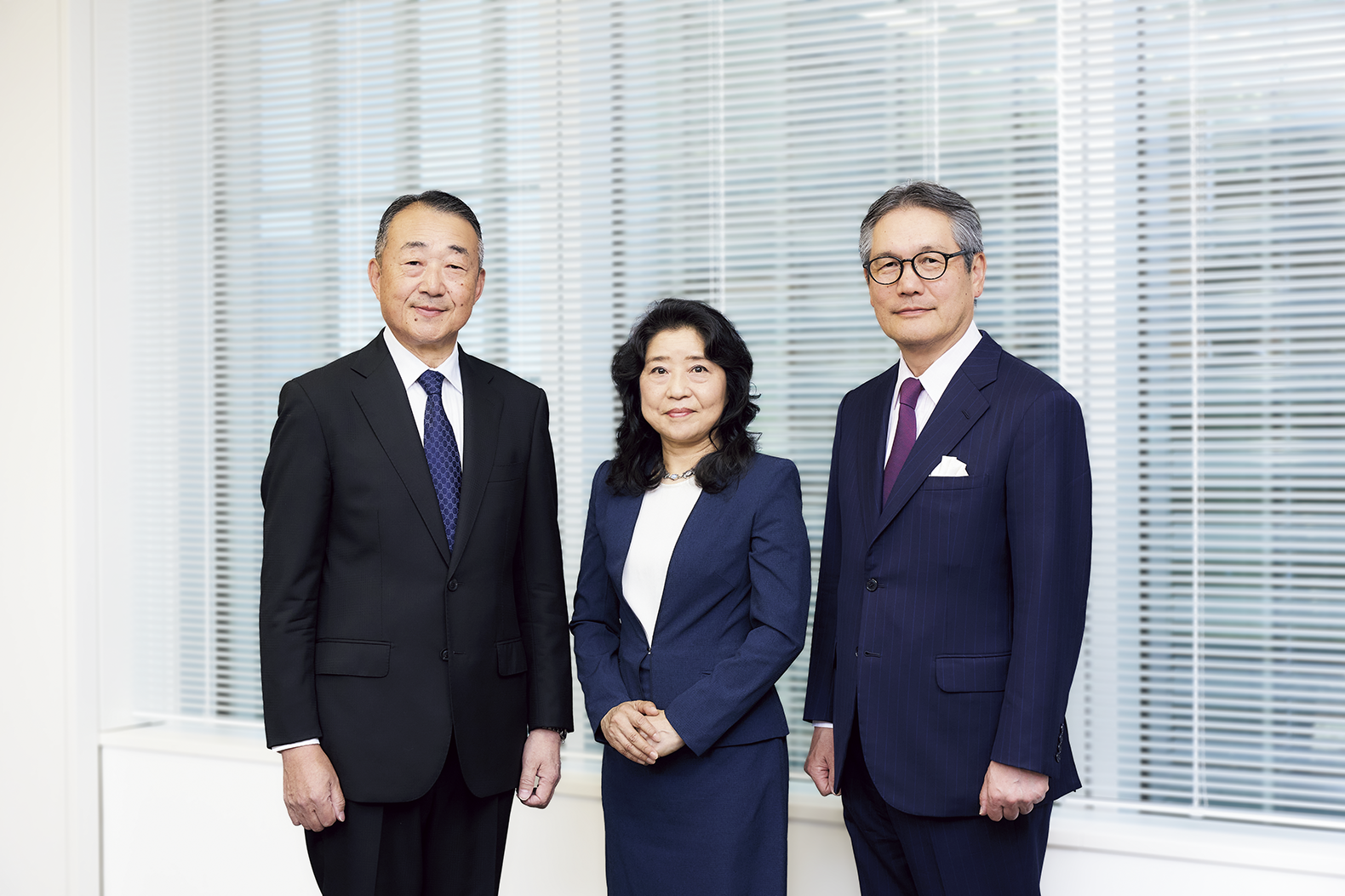
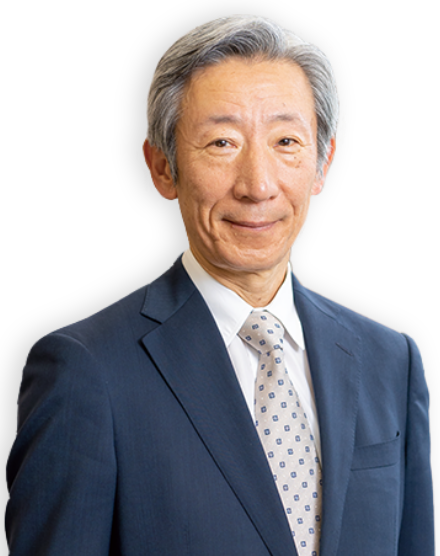
Osamu Chonan(left)
Independent Director
Time in office:Jun.2023–present
My role
I have served for many years as the head of both the manufacturing and sales divisions at a leading food manufacturer, which has played a key role in creating the market for salad food culture that supports a healthy lifestyle, particularly in Japan, China, and Southeast Asia. As an executive, I have accumulated diverse experience and knowledge, and I aim to enhance product branding from an external perspective, while elevating Inabata’s image and value.
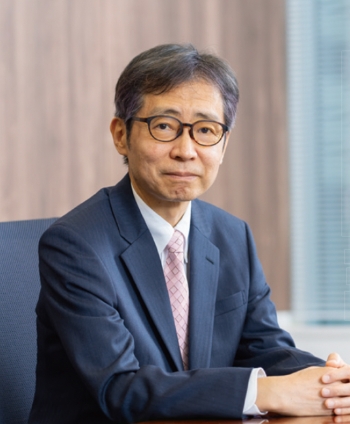
Takako Hagiwara(center)
Independent Director
Time in office:Jun.2021–Jun.2025
My role
Over the years, I have been involved with human resource development for manufacturing and service organizations, and I also have experience with new business creation in the global marketplace. Notably, since I have a long history with planning and promoting human resource development and organizational strategies, I would like to contribute to developing human resources and organizations that can continue to take on the challenges of changing times at Inabata.
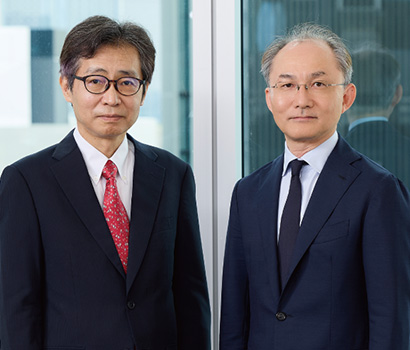
Hisayuki Suekawa(right)
Independent Director
Time in office:Jun.2024–present
My role
I have promoted business strategy and management reform at a cosmetics company with over 150 years of history. From a CSR perspective, I have also addressed societal issues, having led the establishment of an on-site daycare and a consultation center specializing in severe skin concerns. In addition to enhancing our brand through such engagement with society, I aim to contribute to Inabata’s human resource development by leveraging my experience and know-how from university lectures and corporate training programs I am currently involved in.
Mindset reform from a medium- to long-term perspective
How do you perceive the challenges and internal mindset reforms now that the second year of the medium-term plan has begun?
Suekawa
You're absolutely right. I think this reflects the difference in approach to business between a trading company and a manufacturer. Coming from a manufacturing background, I tended to prioritize “focus and select” strategies, aiming to take decisive action and deliver results in a short period. However, I feel that Inabata has a strong sense of altruism, prioritizing the needs of society and continuing products or services even when others have discontinued them. I believe this reflects the Company culture embodied in the spirit of “love (ai )” and “respect (kei ),” but at times, I also think it is necessary to take a bold, aggressive approach.
Chonan
I have also pointed out that the phrase “responding to change” in Inabata’s vision implies that if we do not actively create change ourselves, we will end up reacting too late. In response, management emphasized that, as a trading company, it is essential to adapt to changes in customer needs. While I understood their point, I also believe that in a rapidly evolving business environment, it is necessary to proactively drive change. For example, in the Life Industry business, which handles food products, initiating innovations such as developing new freezing technologies for ingredients by building networks with research institutions and manufacturers can lead to supply chain innovations and the creation of new business opportunities.
Suekawa
At a previous Board of Directors’ meeting, a shareholder’s comment was raised suggesting that the Company consider changing its name, which they felt sounded outdated. Following that, we, the independent directors with a background in B2C companies, proposed exploring a company name and branding that would be more accessible internationally, now that overseas sales account for more than half of the business. However, the discussion did not progress further, as the response indicated that no employees had ever suggested changing the Company name. Even if something seems obvious within the Company, the impression from the outside can be quite different. This is just one example, but looking ahead, I hope we can be more fully utilized in areas where the management team could benefit from careful discussion.
Chonan
It works well while those who understand the Company’s long-standing culture are leading the business, but I feel that discussions need to be strengthened from the perspective of long-term planning. For example, questions such as what truly defines Inabata’s identity and strengths, how to manage products and talent to achieve the goals of the long-term vision, and how to enhance the corporate brand over the medium to long term have not yet been fully addressed.
Hagiwara
Such opinions rarely emerge from employees, but Inabata has consistently taken to heart the feedback provided by multiple independent directors. That is precisely why we are able to share bold ideas and personal perspectives directly in Board meetings.
Topics for discussion at Board meetings
What kinds of issues have recently been discussed at Board meetings? Also, please share any challenges you see for the future.
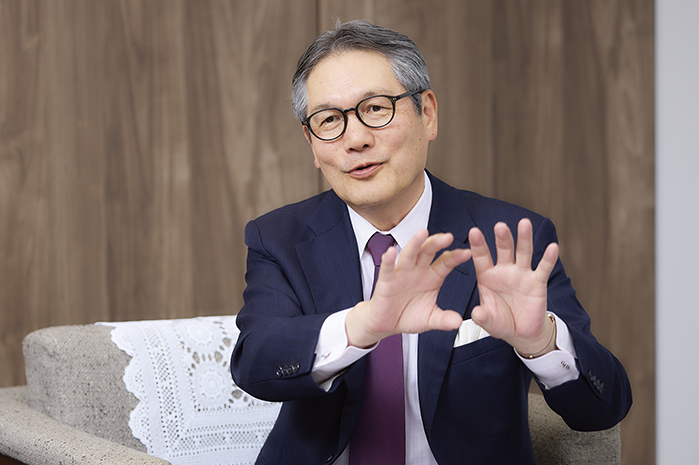
“While a trading company’s cautious approach is important, in a challenging business environment it is at times necessary to take a bold, aggressive approach.”
Hisayuki Suekawa
Suekawa
I became an independent director in 2024. Until then, I had no experience in trading companies and was not very familiar with the products, but I have been patiently guided, and through Board meeting discussions, my understanding has grown significantly. I appreciate that our recommendations on daily operations are being properly addressed and acted upon.
Chonan
Reports are provided on both the current challenges in this tough environment and the plans moving forward. As independent directors, we not only take part in Board meetings but also hear from employees on the front lines about issues that make it difficult to act even when there is intent. I see it as part of our role to bridge the gap between management’s vision and the frontline understanding, helping ensure plans proceed smoothly.
Hagiwara
We appreciate the proactive approach currently being taken with initiatives such as M&A, but what is crucial is the subsequent post-merger integration (PMI) process. We have occasionally raised questions about progress and challenges, and these direct inquiries from an outside perspective have helped deepen communication.
Suekawa
It seems that there are not enough personnel for post-acquisition handling and project management. Inabata also needs to establish a clear approach for areas where it has limited experience, such as how to instill the IK Values in the acquired company.
Hagiwara
In addition, the succession plan for preparing leaders to fill key positions is still lacking in concrete progress at this stage. However, it was valuable to share our understanding of the challenges with the human resources team during a brainstorming session on talent development attended by all directors. The development of infrastructure, such as building a human resource database, is steadily progressing.
Suekawa
The approach of creating a pool of management talent for selection and development is commendable. However, unfortunately, we do not know the individuals in this management talent pool. It would be beneficial, for example, to have opportunities for them to make proposals at Board meetings or to discuss issues informally over meals to better understand their perspectives.
Chonan
It is now time to finalize the approach for selecting the next successors with a three- to five-year perspective. Ideally, those selected should be capable of leading the business, regardless of gender or whether they are internal hires, and the challenge lies in determining how to make this a reality. The next key issue to address is how this connects to employee growth and the Company’s overall development.
Hagiwara
In terms of capital efficiency and stock price, which are closely scrutinized by the capital markets, the Audit and Supervisory Committee members consistently monitor these areas, and the executive team responds sincerely. The diverse Audit and Supervisory Committee members raise various opinions and questions, which helps drive lively and productive discussions.
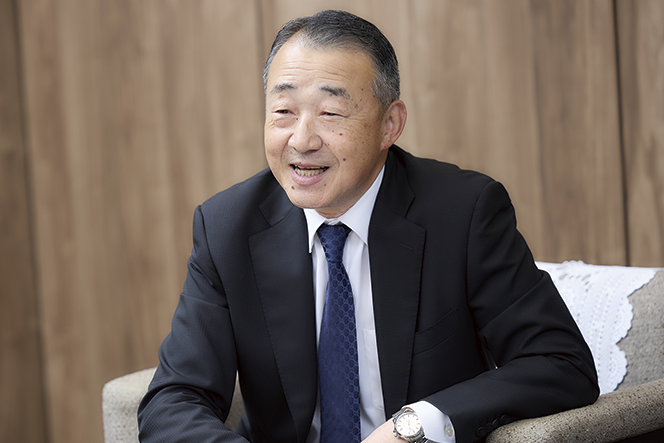
“Our role is to bridge the gap between management’s vision and the frontline understanding, helping ensure plans proceed smoothly.”
Osamu Chonan
Strengthening human capital
In your view, what perspectives will be most critical for strengthening talent development?
Hagiwara
When we spent a full day discussing the medium-term plan in 2023, a number of human resource-related issues came up. This time, as I mentioned earlier, we devoted an entire day to a brainstorming session on talent development with all directors participating, and we exchanged views with the head of human resources as well as the next generation of business leaders. Although this may not lead to immediate conclusions, it was valuable to explore the issues in depth and share perspectives with one another.
Suekawa
Looking ahead to future business development, a major challenge is how to develop global human resources among both Japanese employees and local staff overseas. Another point, which Ms. Hagiwara often emphasizes, is that it’s not just about diversity. Inclusion is equally important—how to make the most of diverse personalities so that employees can work energetically and fully engage in their roles. As an example, it’s not enough to simply increase the number of female managers; Inabata also needs to consider how to create an environment where they can truly thrive.
Hagiwara
I agree. Similarly, it’s not enough for men to simply take parental leave. What matters is considering how work styles should change accordingly, and over the past four years, I feel management has begun to realize the need to take this discussion further and has gained a much deeper understanding. Now, as we enter the next era, everyone is thoughtfully grappling with what truly defines the strengths unique to a trading company and to Inabata, and I am very much looking forward to seeing the results of this effort.
Sustainability
Could you tell us about the role of independent directors in sustainability and the progress of related initiatives?
Hagiwara
In sustainability matters, we independent directors also serve as observers on the Sustainability Committee, attending the biannual reporting sessions and offering our input. The Secretariat team is highly capable and enthusiastic, and the level of discussion has steadily improved. At the recent Sustainability Committee meeting, both the committee members and independent directors shared lively opinions, and the discussion was so engaging that we ran out of time.
Chonan
For the environment, targets for reducing GHG emissions have been set and are being pursued for each emission source across Scope 1 to 3. Inabata also handles environmentally related materials in its business, such as recycled films, so the environment businesses contribute to earnings. However, cost remains an important consideration. Even good initiatives must not come at the expense of the Company’s performance. Maintaining a balance between costs and performance is important. With that perspective in mind, I hope the Company will actively adopt new technologies and leverage them to create “trading company-style initiatives”, such as energy-saving businesses.
Suekawa
If employees can start having those kinds of discussions among themselves, it will inevitably spark innovation and drive growth. When it comes to environmental issues and sustainability, it’s important to cultivate a culture where each employee sees them as their own responsibility, rather than assuming someone else is handling it. I believe creating that mindset isn’t all that difficult.
Hagiwara
One of Inabata’s distinguishing characteristics and strengths is that it takes deliberate action on each issue that arises, addressing them one by one. I also feel that the management team, together with us independent directors, is actively engaged in raising awareness and promoting this mindset. The remaining challenge is how to sustain this momentum going forward. Currently, the number of mid-career hires is increasing rapidly, but I feel there is still a lack of insight on how to quickly align and share knowledge with these new members.
Chonan
Another issue I see as Japan’s most pressing problem right now is the challenges related to children—in other words, the declining birthrate. To address this challenge and contribute to society, it is certainly positive for companies to enhance childcare programs. But by treating it as a broader social issue and working together to proactively develop solutions, a company can truly be recognized as outstanding.
Hagiwara
I strongly agree with Mr. Chonan’s perspective. For that to happen, employees need to direct their attention not only within the Company but also outward toward society. As mentioned earlier, it’s not just about increasing the number of female managers or sales staff. True value for the Company and motivation for employees come from creating a workplace and society where women can genuinely succeed in roles such as sales, and from Inabata’s contributions to making that possible.
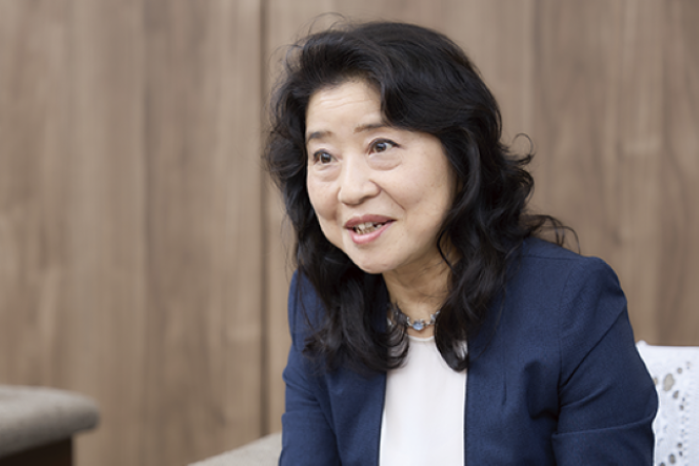
“One of Inabata’s distinguishing characteristics and strengths is that it takes deliberate action on each issue that arises.”
Takako Hagiwara
Hagiwara
It has been a year since the new medium-term management plan began. Despite a challenging business environment, including the impact of U.S. tariff measures, Inabata has continued to deliver solid results and achieve growth, giving us confidence in the business. On the other hand, I feel there is still room for improvement when it comes to boldness and speed in responding to change. For example, in areas where the Company relies on tacit knowledge to decide whether to continue a business, I think we need to question whether it truly makes sense to keep it going.